Why your business loses customers to a slow website

A slow website costs you customers every single day, without you ever seeing it. People click in, the page takes too long, and they are gone before they read a single word. All you notice is that the phone rings less than it should.
I have seen it again and again. A builder with great work and plenty of strong recommendations, but a website that takes seven seconds to load. Customers give up and go to the competitor who showed up right below on Google. The good news is that speed is something you can fix, often without a new site.
A customer you never knew about
Picture a customer you never met. He is sitting in his car in a parking lot. It is raining. He needs a plumber now, because water is running across the bathroom floor at home.
He searches, taps the first name, and the page starts loading. The white screen just sits there. One second. Two. Three. He stares at an empty box while a little circle spins. So he taps back and picks the next name. That page appears instantly, with the phone number right at the top. He calls, and the other plumber got the job.
The first one never knew he was there. No missed call, no message. Just a customer who vanished in silence. That is how you lose people on a slow website. You never see it happen, you only notice that things get a little too quiet.
Why people disappear
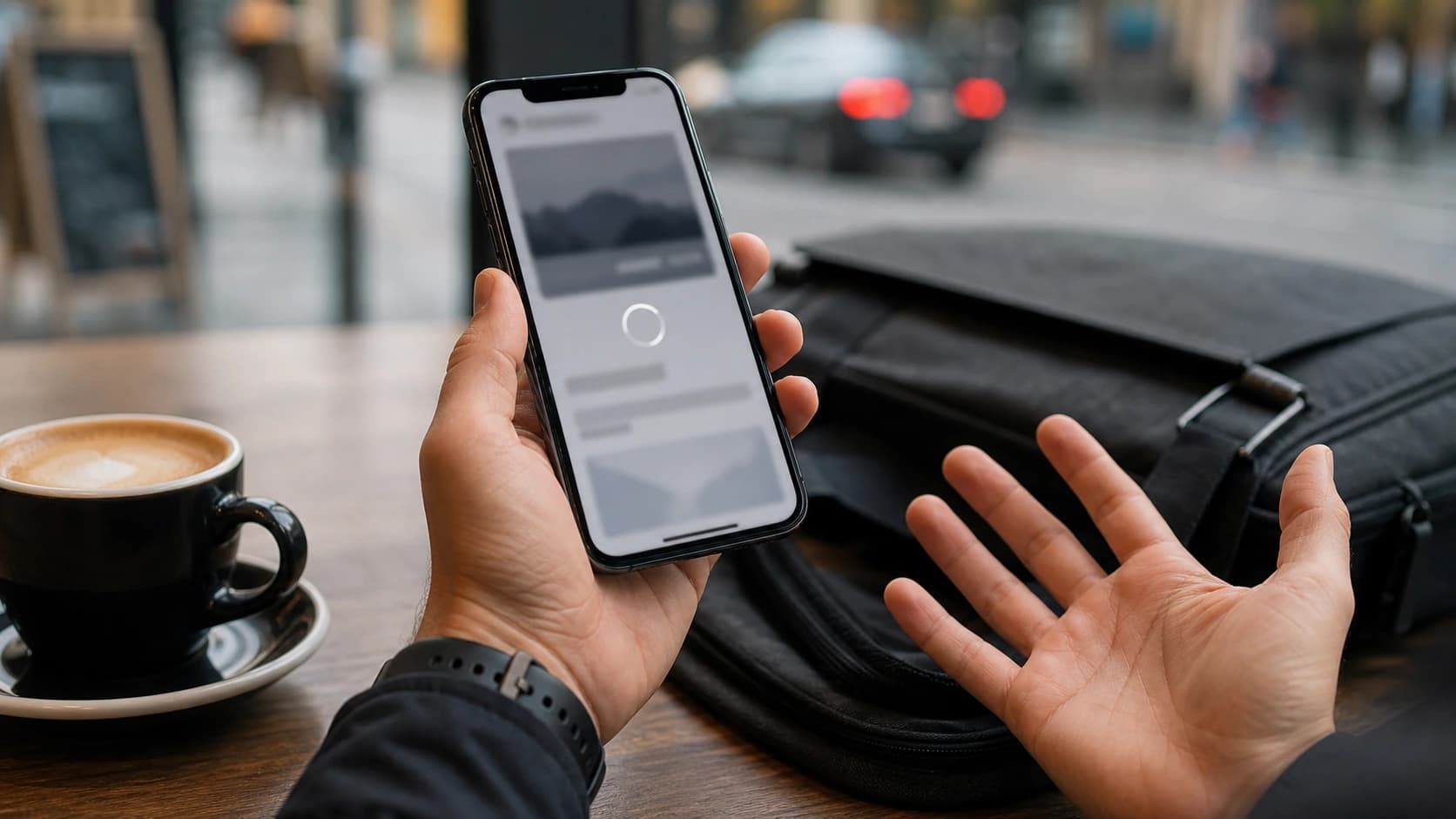
A slow site feels like a shop with a heavy door, the lights off and nobody to help. People walk back out, because they have an entire internet right next door. On mobile they are even more impatient: on the bus, in the store or in the car, often on a poor connection.
The numbers from Google are clear. When load time goes from one to three seconds, the chance that people tap away rises sharply, and they rarely come back. Speed is also about trust. A fast site feels professional and safe, a slow one feels cheap and unfinished, even when your business is solid.
A hairdresser in Oslo got few online bookings. The site took over six seconds on mobile, the images were enormous, and the booking button sat far down the page. We made the site faster and moved the button to the top. Bookings picked up noticeably, without her touching prices or services.
Speed hits you in two places: Google and sales
Google wants to send people to sites that are good to use, and speed is something it measures directly on mobile. A slow site ends up further down in search, and further down means fewer clicks. It becomes a vicious circle: a slow site gets a worse spot, a worse spot brings fewer visitors, and the few who do come disappear because the site is slow.
The other end is the sale itself. When a hundred people click in, almost all of them stay on a fast site long enough to get in touch. On a slow site many give up in the first few seconds. You pay the same to get them there, but fewer become customers. Speed and visibility are closely linked, and I have written more about how you get found on Google.
What makes a website slow
Most slow sites are slow for the same reasons:
- Uncompressed images. A photo straight off your phone can weigh as much as the entire rest of the page. Twenty of those are enough to bring a site to its knees on mobile.
- Heavy templates. A ready-made theme drags along an entire webshop and a booking calendar in the background, even though your café only needs a menu and opening hours. All that code loads anyway.
- Too many scripts. Tracking, a chat bubble, a popup, a Facebook button and ad pixels. Each piece is a little program the phone has to run, and seven of them sit on the page like a weight.
- Poor mobile. More than half come from a phone. Send the full desktop version to a small screen on a poor connection, and the phone has to work hard to shrink everything.
- Too much before the important part. A big video and an image carousel that load before your name and contact details make the customer wait for what he does not need.
- A slow server. A cheap web host that shares one machine with a thousand other sites responds slowly no matter how light the site otherwise is.
How to make it fast again

You do not need to fix everything at once. If you would rather hand it over, speed is part of the foundation when we make websites for businesses. If you are doing it yourself, take it in order, and start with what moves the needle most:
- Clear out what you do not need. Old scripts, popups, a chat nobody answers. Less code gives you a lighter site straight away.
- Compress the images. Make large images lighter without making them look worse. This alone often removes half the problem.
- Show the important part first. Name, offer and contact button should appear right away. The rest can load in the background.
- Choose a lightweight solution. If the template is heavy, swap it for something slim that is built for speed, not for having everything.
- Measure again. Test on a phone over mobile data and check the numbers. Then you see in black and white that it got better.
An electrician thought he needed a brand new site. He did not. We compressed the images, removed two tracking tools and a chat bubble he never answered. The site went from five seconds to under two. Same content, just lighter. If you are building new, it is smart to think about speed from day one, and to make sure the site works just as well on mobile as on a pc, something I have written about in responsive website.
Are you losing customers without knowing it?
You do not have to guess. Many people think their site is fast because it feels fast on their own phone and wifi. Remember the plumber in the car: he was sitting in the rain on a poor signal, not at the office on new equipment. That is the situation that counts.
I offer a free website analysis where I look at the speed, point out what is dragging it down, and tell you honestly what is worth acting on. It is the fastest way to find out whether you are losing customers in silence.
How fast should a website be?
A good rule is that the site should show the important part in under two seconds on mobile. Manage that, and you are ahead of most of your competitors.
Do I have to build a new site to make it faster?
No, usually not. A lot is solved by compressing images and clearing out unnecessary code. Only when the site is very heavy and old does it pay to build new.
Does speed really affect where I land on Google?
Yes. Google measures speed and usability. A slow site ends up further down, and a fast site helps you climb.
What is the most common reason sites are slow?
Large, uncompressed images. That is what I see most often, and also what is easiest to fix quickly.
A slow website is a hole in the bottom of the boat. You can pour in ads and posts all you want, but customers leak out before they turn into anything. Plug the hole first, and everything else works better. If you want a fast, tidy site that actually turns visitors into customers, I can help you with websites built for speed from day one.
Want help with this? See how we work with websites.
Not sure where your website stands?
Run a free analysis and get an honest picture of speed, structure and things that could be stopping your customers.