Professional website vs template: what do you get?
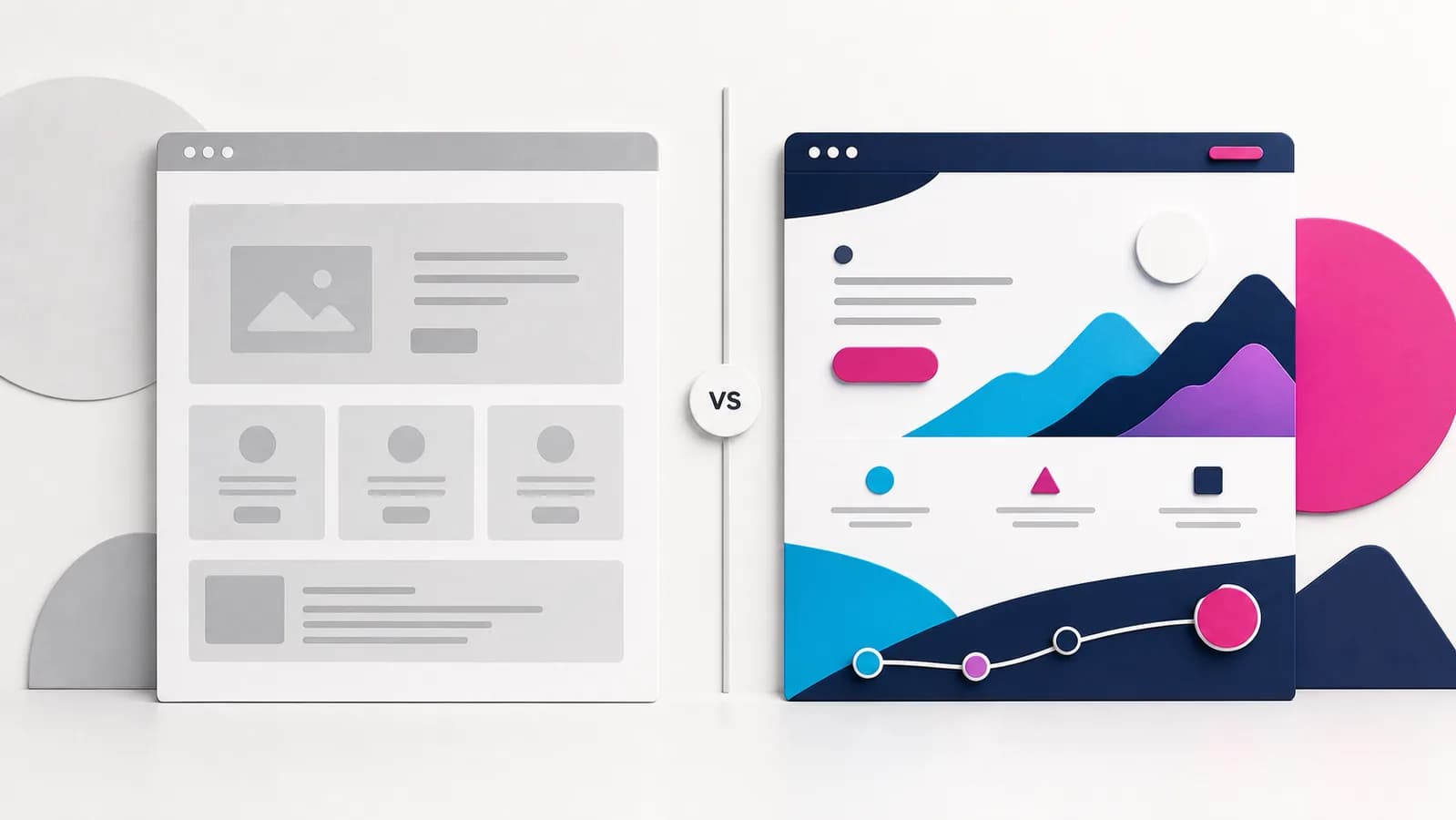
You are about to build a website, and you face a choice. Should you buy a ready-made template, or get a professional website built for your exact business? Both can look fine on screen. But under the surface, they are two completely different things.
I have built both for years. I have seen templates that worked perfectly fine, and templates that quietly cost a business customers, month after month, without the owner ever understanding why.
The short version: layout or goal
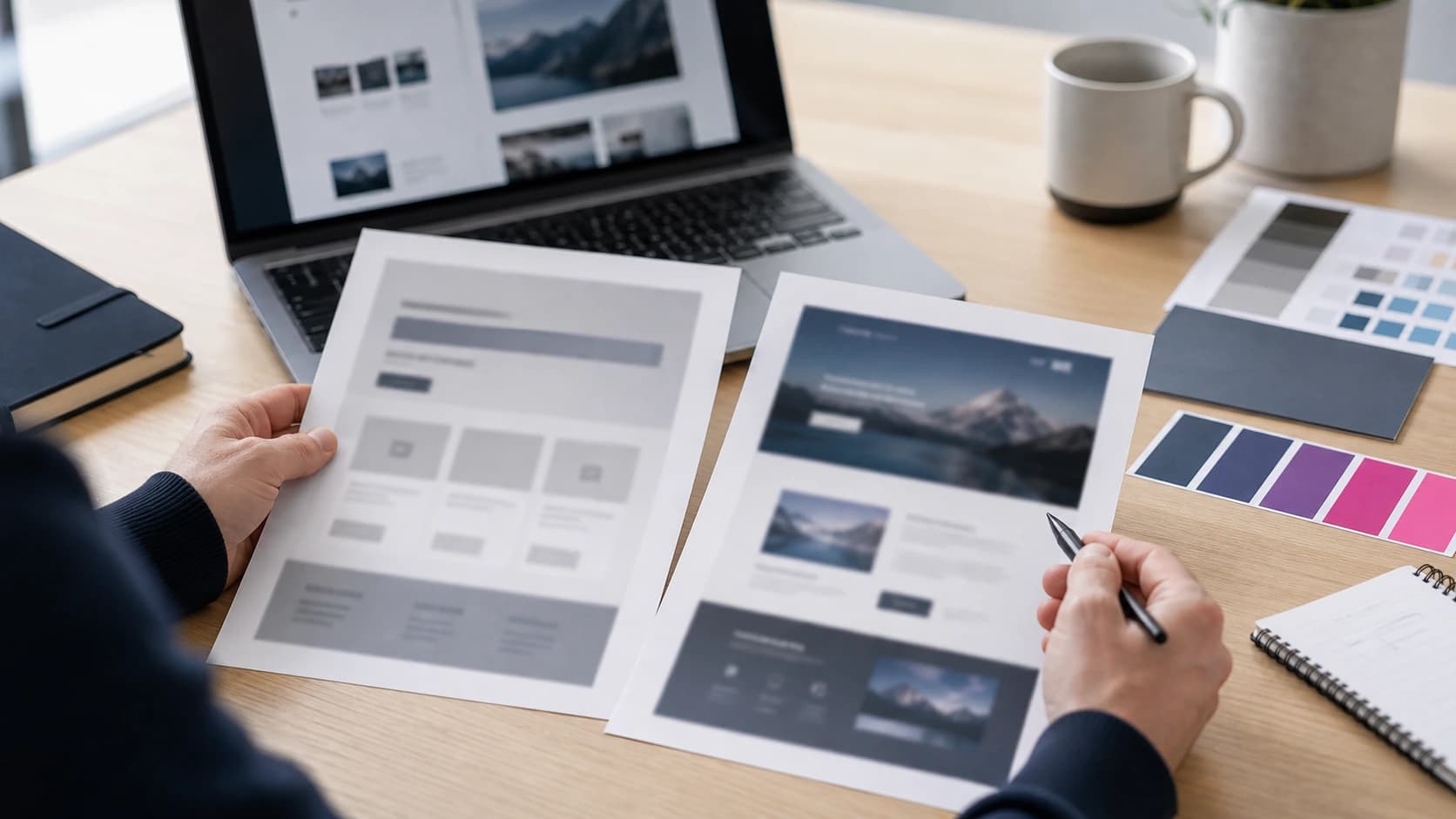
A template starts with the layout. Someone built a finished design that looks good, and then you pour in your text and your images. You adapt to the template.
A custom website starts with the goal. What should the site do? Win jobs, get people to call, sell an appointment? The design is built around the answer. A template asks "how should it look?". A professional website asks "what should this achieve?".
So what is a template, really?
A template is a ready-made setup that thousands of others use too. The most common ones are these:
- WordPress themes. You install WordPress and pick a theme that controls the look. There are tens of thousands, free and paid.
- Wix. Drag and drop in the browser, often starting from a ready-made template where you swap out the content.
- Squarespace. Polished, ready-made designs for people who want something stylish fast, without fiddling with the technical side.
- Webflow templates. Webflow is powerful, but many people buy ready-made templates and fill in their own. That is still a template.
All of them have the same thing in common. Someone made the design decisions before they knew who you were, which is simply how templates have to be made. They have to fit everyone, and that is exactly why they fit no one fully.
When a template is perfectly fine
A template is not the wrong choice for everyone. I would rather you save money in the right place than pay for something you do not need. A template can be perfectly fine when:
- You are testing a new idea and want to see if there is life in it before you invest.
- The website is a small corner of the business, not the engine that brings in customers.
- You need something live tomorrow, and can live with it not being perfect.
- The budget is tight right now, and a simple site is better than no site.
A local hobby club that just needs opening hours and contact info, or a freelancer who wants a simple landing page while building a portfolio, is well served by a template. You get something usable fast, and it does the job.
When a template quietly costs you money
A template can look fine and still drain your business of customers without you noticing. It happens quietly, in four common ways.
1. It is often slow
Templates are built to fit everyone, so they drag along loads of code you never use. A WordPress theme can ship with ten sliders and twenty modules you never touch, and all of it still loads. People do not wait for a slow site, and many are gone before they have even seen you. More on that in why a slow website loses customers.
2. You look just like everyone else
A popular template is used by thousands. A hairdresser in Bergen can have the exact same Squarespace template as three other hairdressers in town. A site that looks like everyone else is remembered by no one.
3. It is hard to change
Templates are flexible right up until you want something the template was not built for. Then you hit a wall. You want to move a button or add a booking field, and suddenly you are fighting the template instead of working with it. Many end up paying a developer to force it, and there goes the saving.
4. It needs maintenance
To do everything for everyone, templates fill up with plugins. Every add-on can break, go out of date or open a security hole. A WordPress site with fifteen plugins needs maintenance you may not have time for.
What do you get with a professional website?
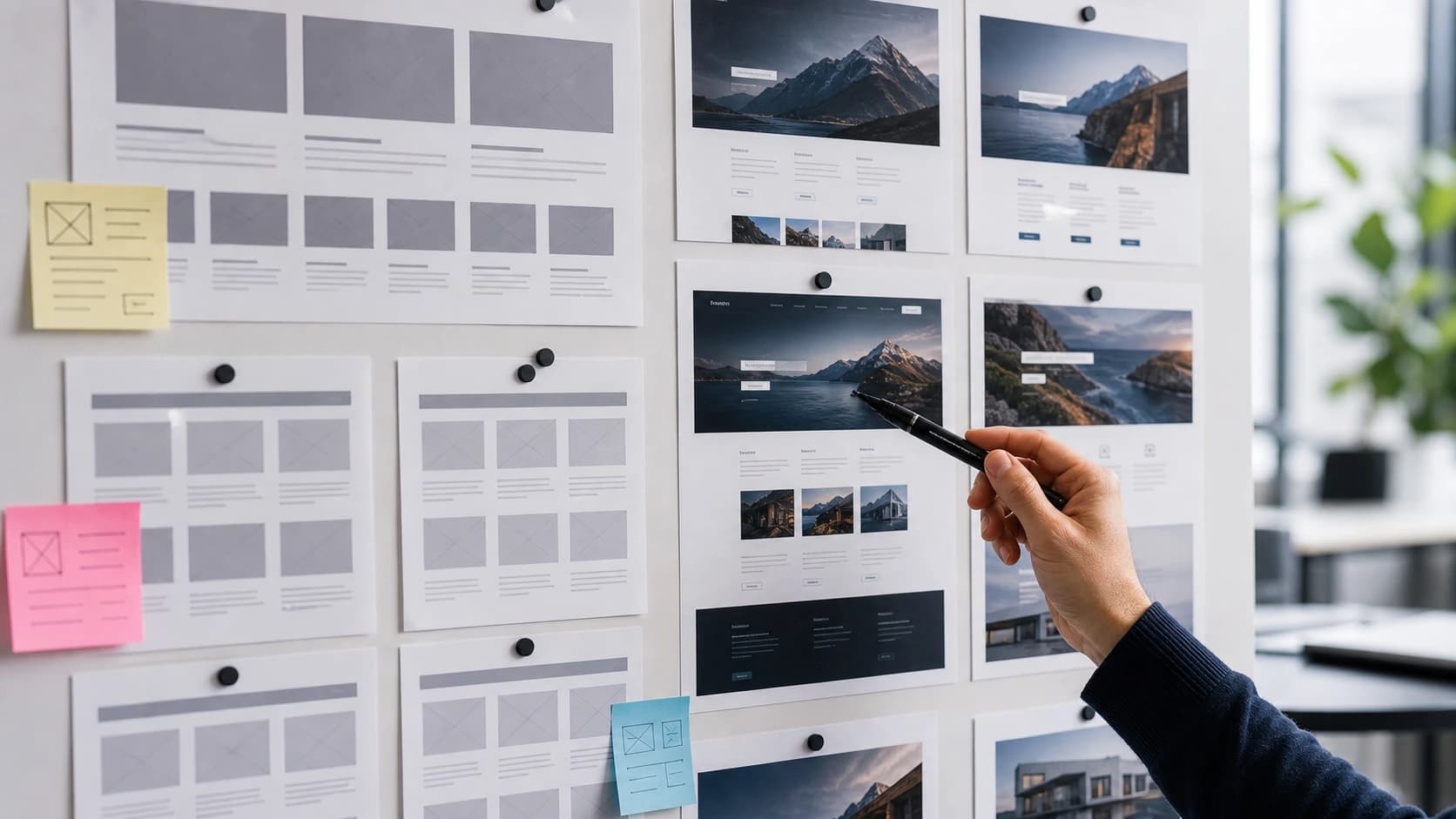
A professional website is built for you, from the goal outward, and that is how we make websites for businesses. It does not drag along unnecessary code, because only your code is in there. It looks like you, and does what you actually need. Concretely, you usually get:
- A design built for your goal. If people should call, the number is clear. If they should book, the whole site leads there.
- High speed. Only what you need loads, and a light site keeps your customers.
- An identity that is yours. Colors, tone and images that match the business, so people remember you.
- Freedom to grow. Booking or a new field later gets built in, because the site is yours, not locked by a template.
- Solid engineering. Built for Google, mobile and to last, without a pile of plugins that break.
A plumber in Trondheim who wants more jobs gets "Call us" and "Request a site visit" up top, a site that loads in under a second, and that shows up when people search locally. A template would have put a pretty banner first and hidden the phone number at the bottom.
How to choose
Forget the technical side for a moment. The real question is how much the website matters to your business. Ask yourself these:
- Is the website the main way new customers find me?
- Do I make money directly through the site, via booking or sales?
- Am I competing against others who look alike?
- Do I want to expand with new features later?
If you said yes to one or more, a professional website is an investment, not a cost. If you said no to all of them, and the site is just a simple business card, a template can be perfectly fine. Wondering what a custom site costs? I have an honest breakdown in what a website costs, and the full recipe for a strong business site in building a website for your business.
Is WordPress a template or a professional solution?
It can be both. WordPress with a ready-made theme is a template. WordPress built custom, without a pile of plugins, can be a professional solution. The tool does not decide, it is how it is used.
Can I start with a template and switch to custom later?
Yes, and it is often sensible. Test the idea with a simple template first. When the site starts to matter to your revenue, build it custom. By then you have learned what you actually need.
Why is a template often slow?
Because it has to fit everyone, it drags along code and features you never use. All of it loads anyway. A custom site has only what it needs, and is therefore faster.
Doesn't a template look just as good as a custom site?
In a picture it can. The difference is underneath: speed, the ability to stand out, and how easy it is to change. A pretty template that is slow and identical to everyone else still costs you customers.
If you are unsure what suits you, I am happy to help you think it through. I build professional websites for Norwegian businesses, from the goal outward, and I will tell you honestly if a template is enough for your needs. If you want a no-obligation review of the site you already have, you can start with a free analysis.
Want help with this? See how we work with websites.
Not sure where your website stands?
Run a free analysis and get an honest picture of speed, structure and things that could be stopping your customers.