AI tools for small businesses: how to choose right
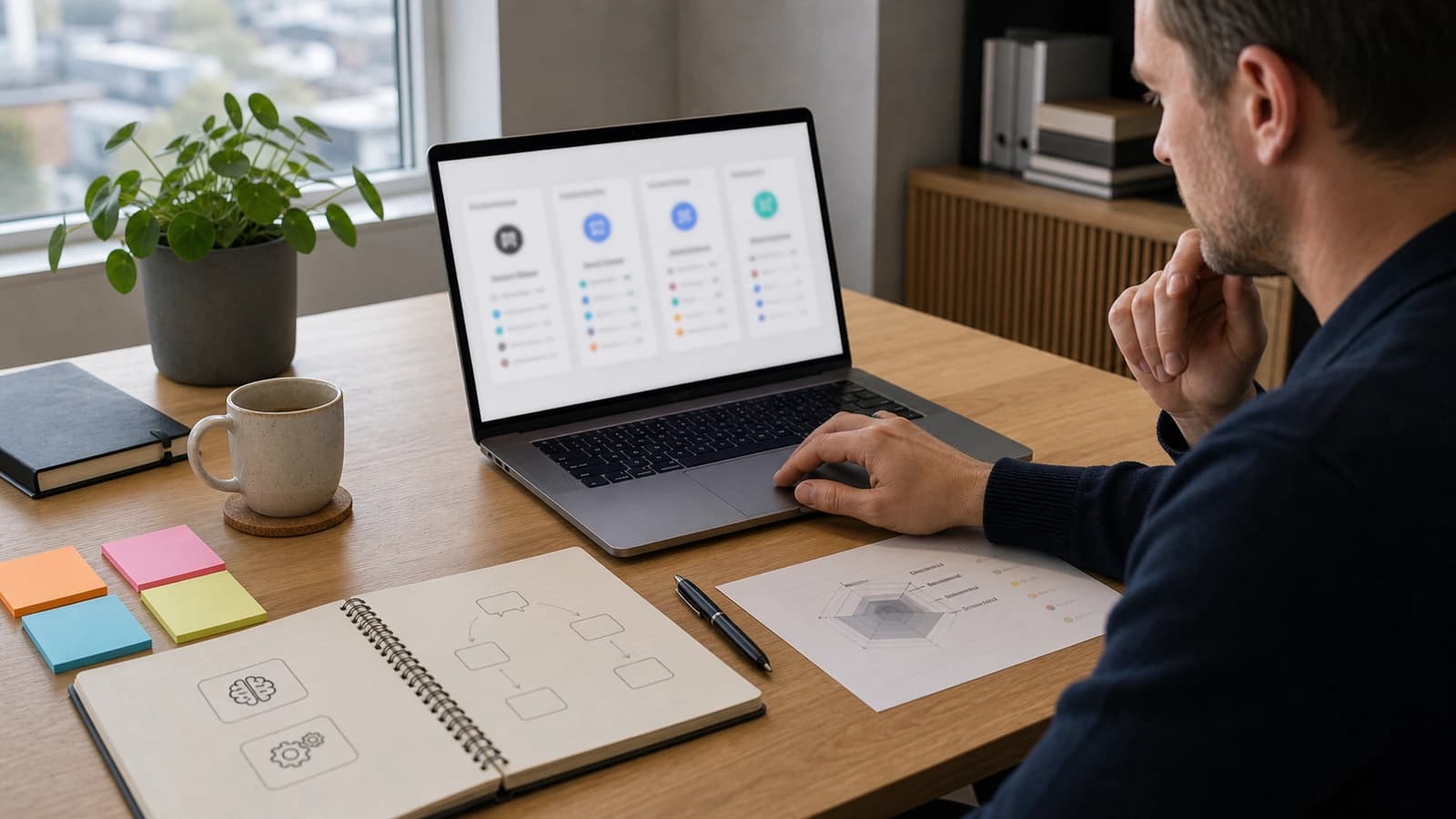
AI tools for small businesses are software or custom functions that use artificial intelligence to do one concrete job better. It could be sorting documents, suggesting replies, summarising meetings or following up enquiries. It sounds simple, yet most people still fall into the same trap.
The trap is starting with the tool. You see an app that looks impressive, buy it, and then try to work out what it is for. Then AI becomes a toy sitting open in a tab, not a tool that actually removes work.
At wevo I build AI tools around concrete tasks in Norwegian small businesses, not around a feature list. Here I go through where to begin, how to choose between off-the-shelf and custom, what actually saves time, and which pitfalls cost the most.
Where should a small business begin with AI tools?
Begin with the task, not the tool. The right AI tool does one concrete job better: sorting, reply suggestions, summarising or follow up. If you cannot describe the job in one sentence, it is too early to choose a tool.
Think of Lise, who runs a small accounting office in Sandnes. She spends a whole morning every week sorting incoming receipts and sending them to the right folder. That is a defined task with a clear start and end. It suits AI. Asking AI to make the office smarter does not, because that is not a task at all.
Most small businesses have more such tasks than they think. They hide in everyday work because they have always been done by hand. These signals show where to look:
- Repeated tasks: employees write, sort or copy the same type of information often.
- Many loose tools: the business uses several apps, but data does not flow between them.
- Uneven answers: customers receive different answers depending on who has time.
- Little overview: the owner does not know where time disappears or which cases stop.
Off-the-shelf or custom: what fits you?
This is the choice most people wonder about. The answer depends on how much the task connects to the rest of operations. Ready-made tools fit simple, defined needs. Custom solutions fit when AI must connect to the website, the systems, the roles or the business's own data.
A clinic that only needs help tidying emails can manage for a long time with a ready-made tool. A builder who wants inspection notes to land automatically in the right project needs something that talks to the systems he already uses. Then off-the-shelf quickly becomes a dead end, because it cannot reach where the work actually happens.
| Need | Off-the-shelf fits when | Custom fits when |
|---|---|---|
| Text and reply suggestions | You write drafts and approve everything yourself. | Answers must draw on your own prices, routines or customer data. |
| Documents | You sort a few files manually today. | Files must be labelled, stored and routed between systems automatically. |
| Summaries | You paste text and read the summary yourself. | Decisions and tasks must be stored in a structured way and followed up. |
| Analysis | You look at simple numbers in a ready dashboard. | Data from website, forms and systems must be connected. |

My advice is to start simple and grow more ambitious over time. Use off-the-shelf tools to learn what actually helps. When you see that a task gives enough value, and that it must talk to the rest of operations, that is the right moment for AI services built around your specific business.
Security and data: what must be in place first?
The most important choice is which data the tool gets to see, not which tool is smartest. An AI tool with access to everything is a risk. One that only sees what it needs for the job is safe enough for most small businesses.
Whichever tool you land on, make the same assessment any organisation should make before adopting a new digital solution: what is the risk, who carries the responsibility, and which data does the solution build on. For a small business it comes down to three simple questions before you let a tool loose on real customer information:
- Which data does the tool actually need to do the job?
- Where is the information stored, and who has access to it?
- Who in the business is responsible for quality, sources and follow up?
The last question is forgotten most often. An AI tool without a clear owner slowly rots. The answers never get checked, the errors stay, and the tool never gets better. Then it is a risk instead of a help. The owner does not need to understand the technology, but they do have to stand behind the result.
What actually saves time, and what only looks smart?
An AI tool does not save time because it produces text. It saves time when the work is actually finished without a manual round afterwards. If AI writes a reply, but someone still has to cut, paste and correct before it goes out, you have moved the work, not removed it.
These four use cases give real value for small businesses when done right, and become a trap when done carelessly:
| Use case | When it helps | When it becomes a trap |
|---|---|---|
| Chat or reply suggestions | The customer gets faster help and employees approve important answers. | AI answers without sources or clear boundaries. |
| Document sorting | Files are labelled and sent to the right place. | Sensitive files are loaded without access control. |
| Meeting summaries | Decisions and tasks are stored in a structured way. | The summary stays inside an app nobody follows up. |
| Request analysis | The owner sees patterns and can improve the website. | Numbers are used without understanding where data comes from. |
A small equipment rental firm in Ålesund can let AI suggest answers to the same questions customers ask every week. It helps, because an employee approves the answer before it goes out. An architect in Bodø can let AI gather all inspection notes into one structured document per project. It helps, because the document lands where the project is actually run from. In both cases it is the connection to the routine that creates the value.
How to get started without wasting time
You do not need a big plan. You need a small, clear start. Choose one task, set boundaries for what AI may do, and test with real examples before you let the tool meet new customers. This order keeps you away from the most expensive mistakes:
- Choose one task that takes time every week and has a clear start and end.
- Find which data AI must use, and which data it should not see.
- Create rules for when AI may act, suggest or only summarise.
- Test with real examples from the business before using it on new customers.
- Measure whether the work actually becomes faster, safer or more precise.
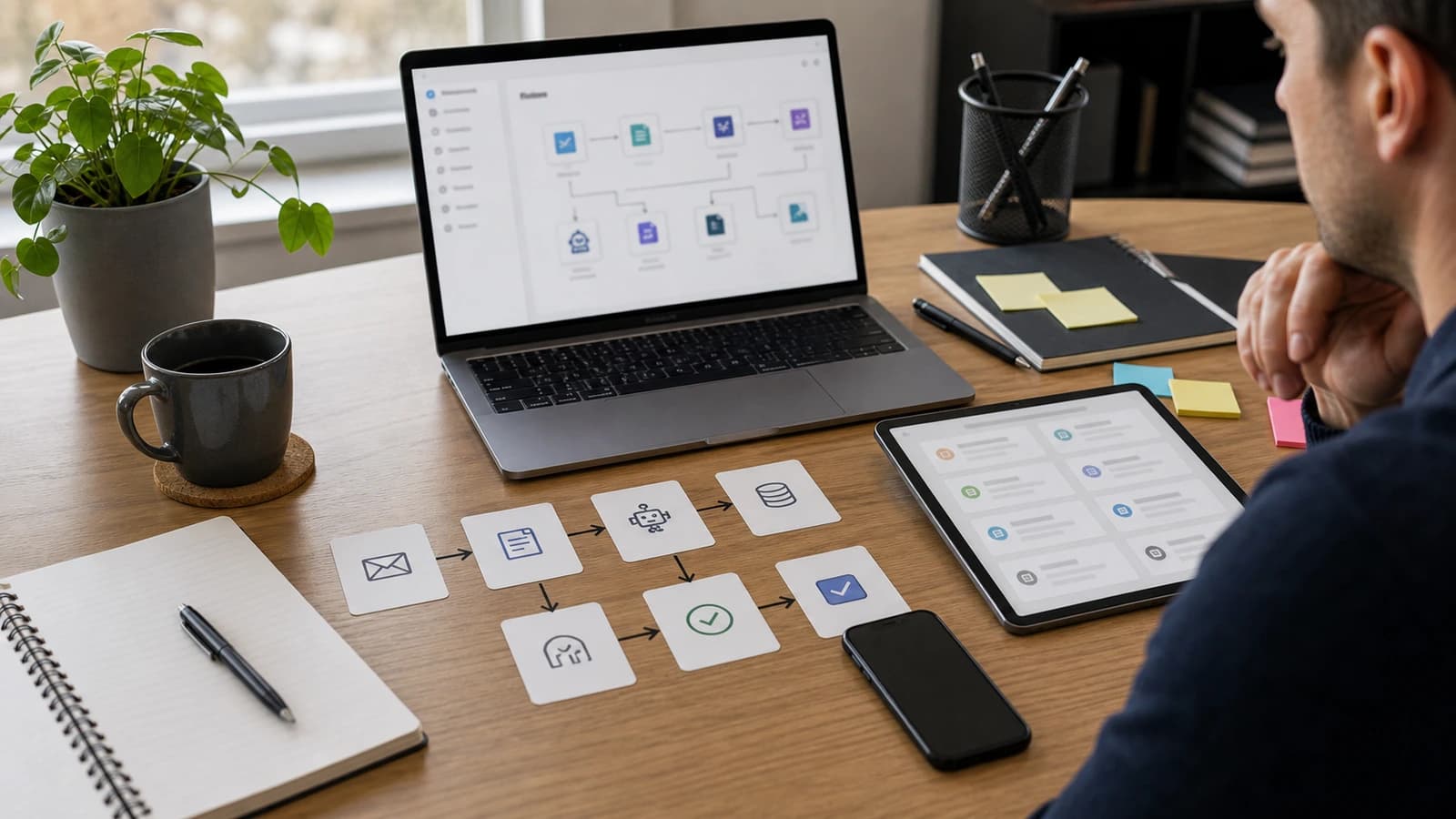
Point five is the most important, and the one skipped most often. If you do not measure the effect, you do not know whether the tool helps or just feels modern. Measure saved time, fewer errors, faster answers, and whether employees actually use the solution in normal operations. If nobody uses it, it is not good no matter how smart it is.
The pitfalls that cost small businesses the most
Most mistakes are not technical. They are choices that seem harmless at first and grow expensive over time. These four I see again and again:
- Tool first: the business buys an app before defining the task.
- Too much access: AI sees more data than it needs for the job.
- No owner: nobody is responsible for quality, sources and improvement.
- Too little integration: AI creates text, but the work stays manual afterwards.
The last one is the most underrated. An AI tool that is not connected to automation of work processes gives you neat drafts, but not finished work. The value lies in the connection between what AI creates and what happens next in operations.
If you want to go beyond simple tools, the path points towards an AI agent for business that can carry out several steps in a routine, not just answer questions. But do not start there. Start with one task that works, and build from there.
AI tools for small businesses are right when the business already has clear routines, but spends too much time on repetition, searching or manual follow up. If you want to build it around your own operations from the start, AI services from wevo are a good place to begin.
Which AI tools fit small businesses?
Tools that solve a clear task fit best, such as reply suggestions, document handling, summaries or simple analysis.
Should small businesses use ready-made AI tools or custom solutions?
Ready-made tools fit simple needs. Custom solutions fit when AI must connect to a website, systems, roles or business data.
Are AI tools safe for customer information?
They can be safe if access, storage, consent and logging are planned before the solution is used.
How do you measure the effect of AI tools?
Measure saved time, fewer errors, faster answers and whether employees actually use the solution in normal operations.
Want help with this? See how we work with ai & automation.
Not sure where your website stands?
Run a free analysis and get an honest picture of speed, structure and things that could be stopping your customers.