Local SEO: get visible with a Google Business Profile
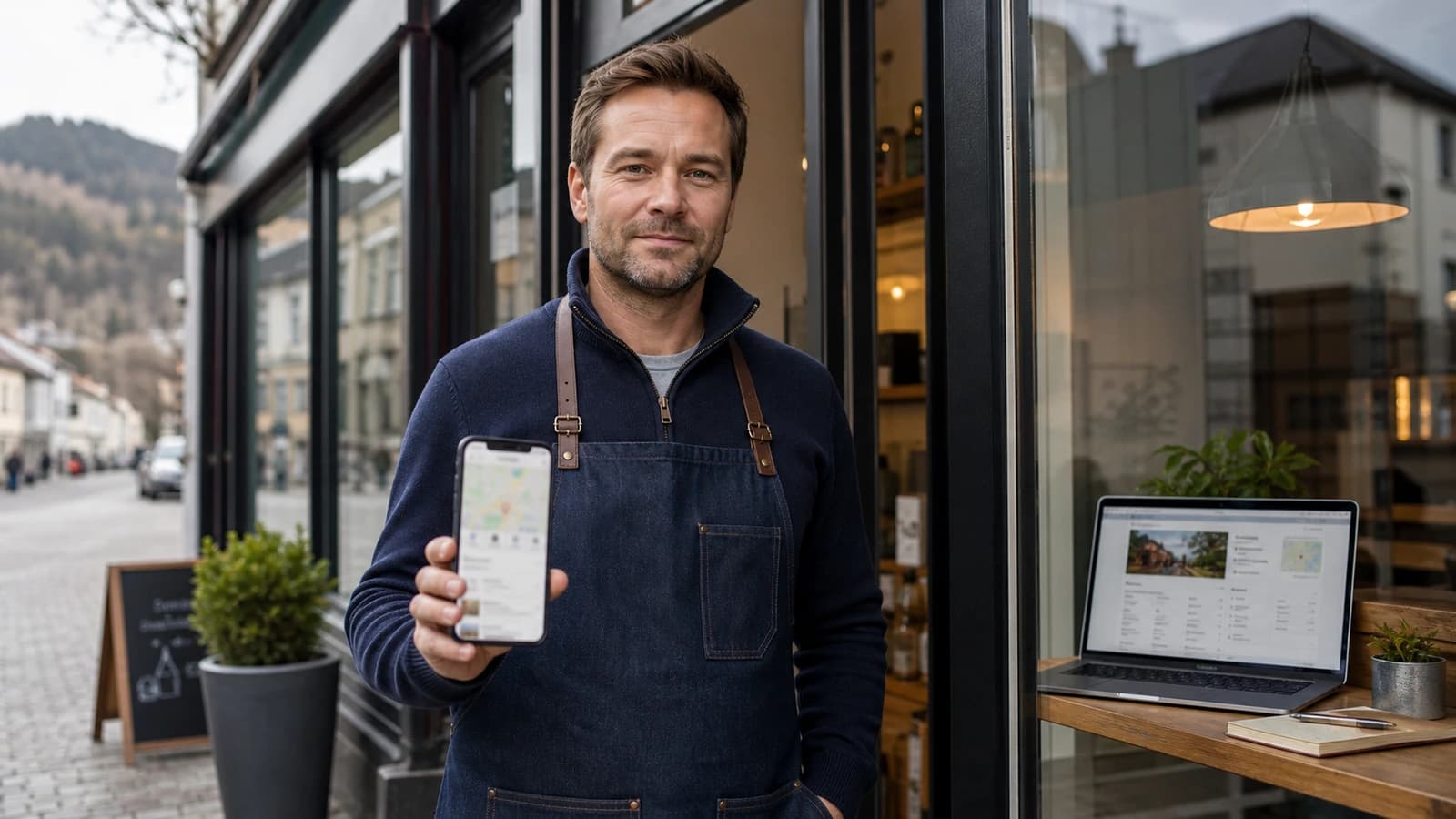
Local SEO is about being chosen when people in your area search for a supplier, clinic, tradesperson, adviser or service. A Norwegian business becomes stronger locally when Google Business Profile, website, reviews, photos and area content tell the same clear story.
The local customer rarely searches politely. She does not always write a company name. She writes plumber near me, physiotherapist Lillestrøm, web designer Bergen or help with website in Oslo. Google considers distance, relevance and how clearly the business appears. Google describes local ranking as a combination of relevance, distance and prominence. In practical language: do you fit the search, are you close enough, and do you seem trustworthy?
At wevo, I do not build SEO as a decorated standalone service. But when we make websites for businesses, local visibility must be thought into it: structure, text, photos, technology, mobile and clear contact points. A fast website is part of what should actually create customers.
What is local SEO?
It is the work of making the business visible for searches with geographic intent. That can be a city, county, neighbourhood or just near me. The key point is that the searcher is often closer to action than in a general search. A person searching for an electrician in Sandnes does not need a long lecture. He needs a supplier who looks serious, answers clearly and is easy to contact.
Google Business Profile is often the first meeting. There the customer sees opening hours, address, reviews, photos, services and a link to the website. But the profile does not stand alone. If the profile promises one thing and the website is thin, slow or unclear, trust becomes weaker. Local search works best when profile and website support each other.
What should a Google Business Profile contain?
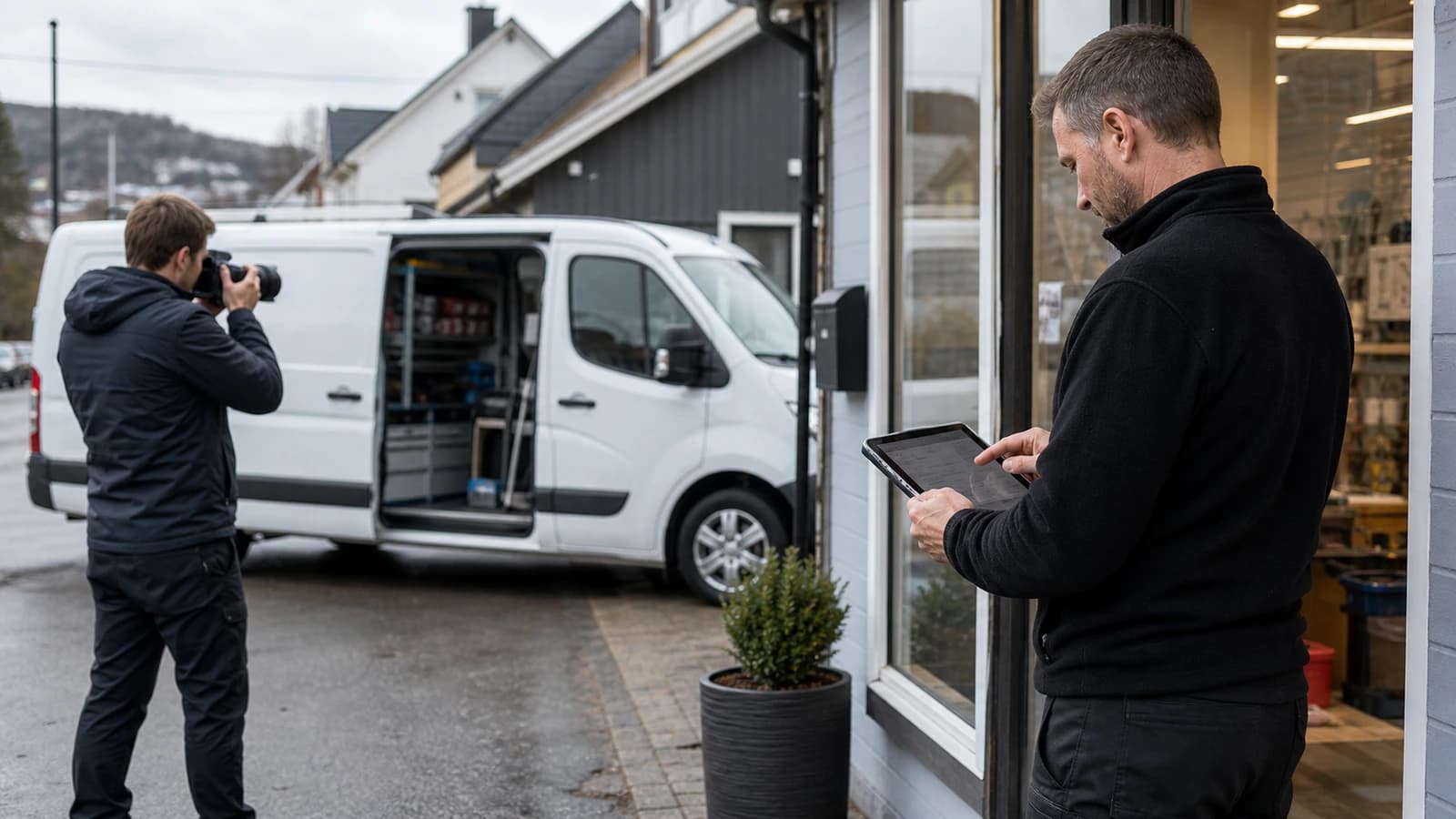
The profile must be complete, but not overfilled. Choose the right primary category, add services, opening hours, contact information, area and photos that actually show the business. If you run a clinic, the photos should show the premises, treatment rooms and reception. If you run a trades company, the photos should show work, vehicle, equipment and finished projects. Generic photos create less trust.
- Choose an accurate primary category and relevant additional categories.
- Write a short description that says who you help and where.
- Add services with clear names customers actually search for.
- Use real photos from premises, team, work and results.
- Keep opening hours, phone and link updated.
- Reply to reviews calmly and professionally.
- Link to a website that expands on the services and area.
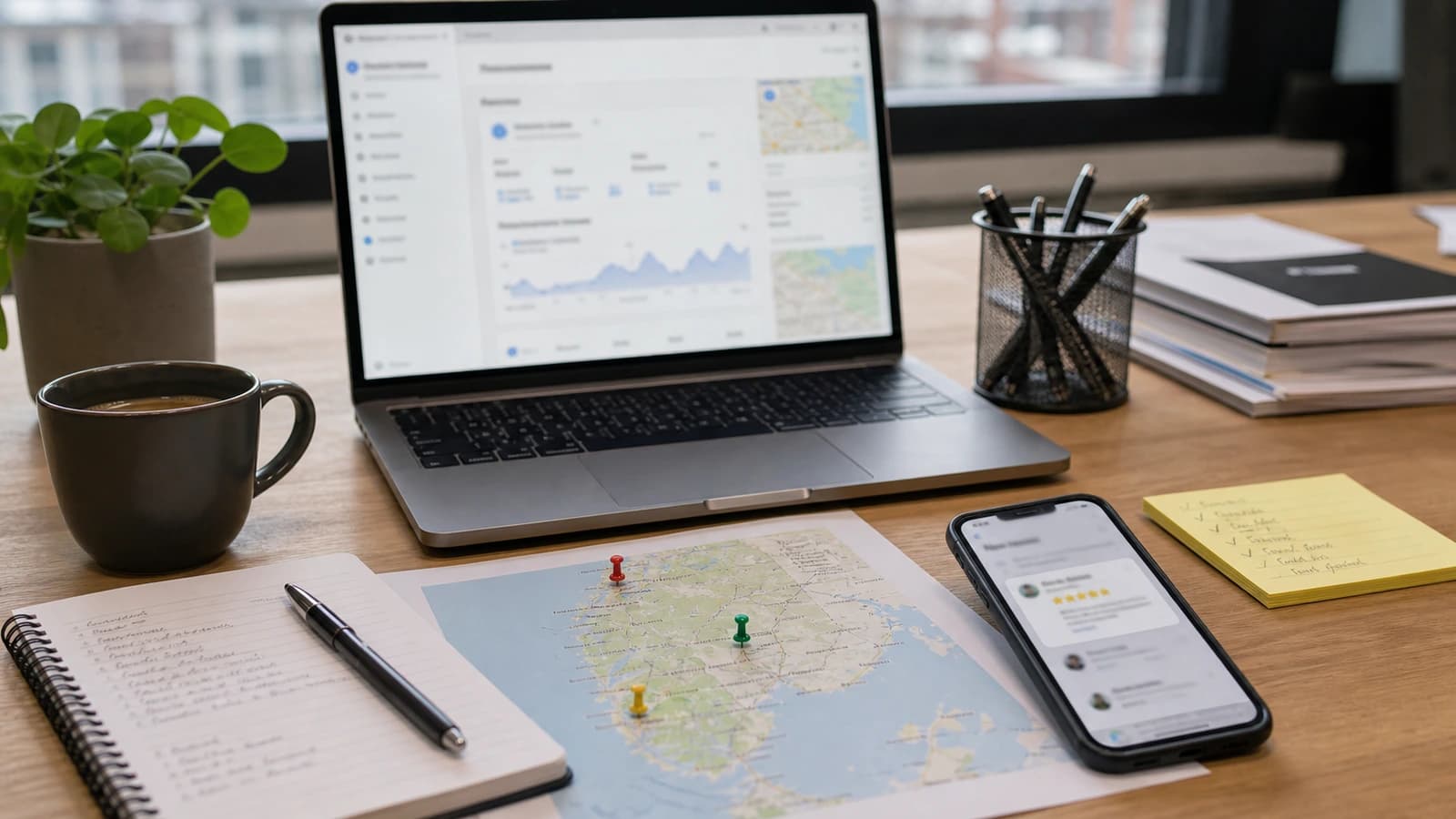
How should the website support local search?
The website should do three things quickly: explain the service, show the area and build trust. Many local businesses hide the places they cover at the bottom of the page, or only write that they help customers throughout Norway. That may be true, but it does little for searches with local intent. If you actually work in Stavanger, Sandnes and Sola, that should be clear where relevant.
| Element | Weak local page | Strong local page |
|---|---|---|
| Title | Welcome to us | Service plus area plus clear value |
| Content | General promises | Concrete services, examples and local details |
| Contact | Form hidden at the bottom | Phone, form and address easy to find |
| Photos | Stock photos | Real photos of work, premises and people |
| Mobile | Heavy page | Fast page that is easy to use on phone |
A good local page does not need to pretend the business is bigger than it is. It should show that the business is real. Write which problems you solve, which customers you help, which areas you cover and what the customer can expect. This also strengthens visibility in AI search, because answer engines need clear entities: business, service, place and proof.
How do reviews affect local visibility?
Reviews primarily affect trust, but they can also support local visibility because they provide signals of activity and reputation. Google recommends that businesses encourage customers to leave reviews and respond to them. Do not make this artificial. Ask after well-delivered work, make it easy, and reply like a person.
- Ask happy customers for an honest review after delivery.
- Reply to all reviews, even short ones.
- Do not argue publicly with difficult customers.
- Use feedback to improve the website and services.
- Avoid bought or manipulated reviews.
Which local pages should a business create?
Do not create a hundred almost identical area pages. That becomes thin, and it does not help the customer. Instead, create strong pages where you actually have something to say. A plumber who works in three municipalities can have a main page that explains the services, and separate sections or pages for the most important areas if the content is unique. A consultant can write about typical problems in industries or regions where he actually works.
For wevo, this means that websites for businesses should be built with local signals where natural. A page for a local clinic should show the city clearly. A page for a nationwide B2B service should rather show industries, problems and references. Being found locally must follow the business model, not just a keyword.
What is the practical checklist for local visibility?
- Check that name, address, phone and website are the same on profile and website.
- Choose the right category in Google Business Profile.
- Add real services and local areas.
- Upload new photos that show the business as it actually is.
- Write website copy that combines service, area and the customer's problem.
- Make contact easy on mobile.
- Ask customers for reviews after well-delivered work.
- Read being found on Google for the search foundation.
How do you measure whether local search works?
Look for action, not just impressions. More profile views are nice, but more relevant enquiries are better. Check which searches create views in Google Business Profile, which pages get local traffic in Search Console, and whether contact forms, phone clicks and map clicks increase. Combine the numbers with the phone: ask new customers how they found you.
Local SEO is rarely one large move. It is many small correct signals pointing the same way. When profile, website, reviews, photos and technical quality are aligned, you become easier to understand for customers, Google and AI answers. That is when local visibility starts becoming an asset.
What is local SEO?
Local SEO is the work of making a business visible for searches in a specific area, such as a city, municipality, neighbourhood or near me search.
What is Google Business Profile?
Google Business Profile is the business's free profile in Google Search and Google Maps. It shows contact information, opening hours, reviews, photos, services and a link to the website.
How do I rank higher locally on Google?
Start with a complete Google Business Profile, clear website, correct local signals, real photos, relevant reviews and a fast mobile-friendly page.
Do all businesses need local pages?
No. Local pages are useful when you actually serve the area and can write unique, relevant content. Thin copied pages for many places rarely improve the job.
Want help with this? See how we work with websites.
Not sure where your website stands?
Run a free analysis and get an honest picture of speed, structure and things that could be stopping your customers.