Custom system vs off-the-shelf: when to build your own
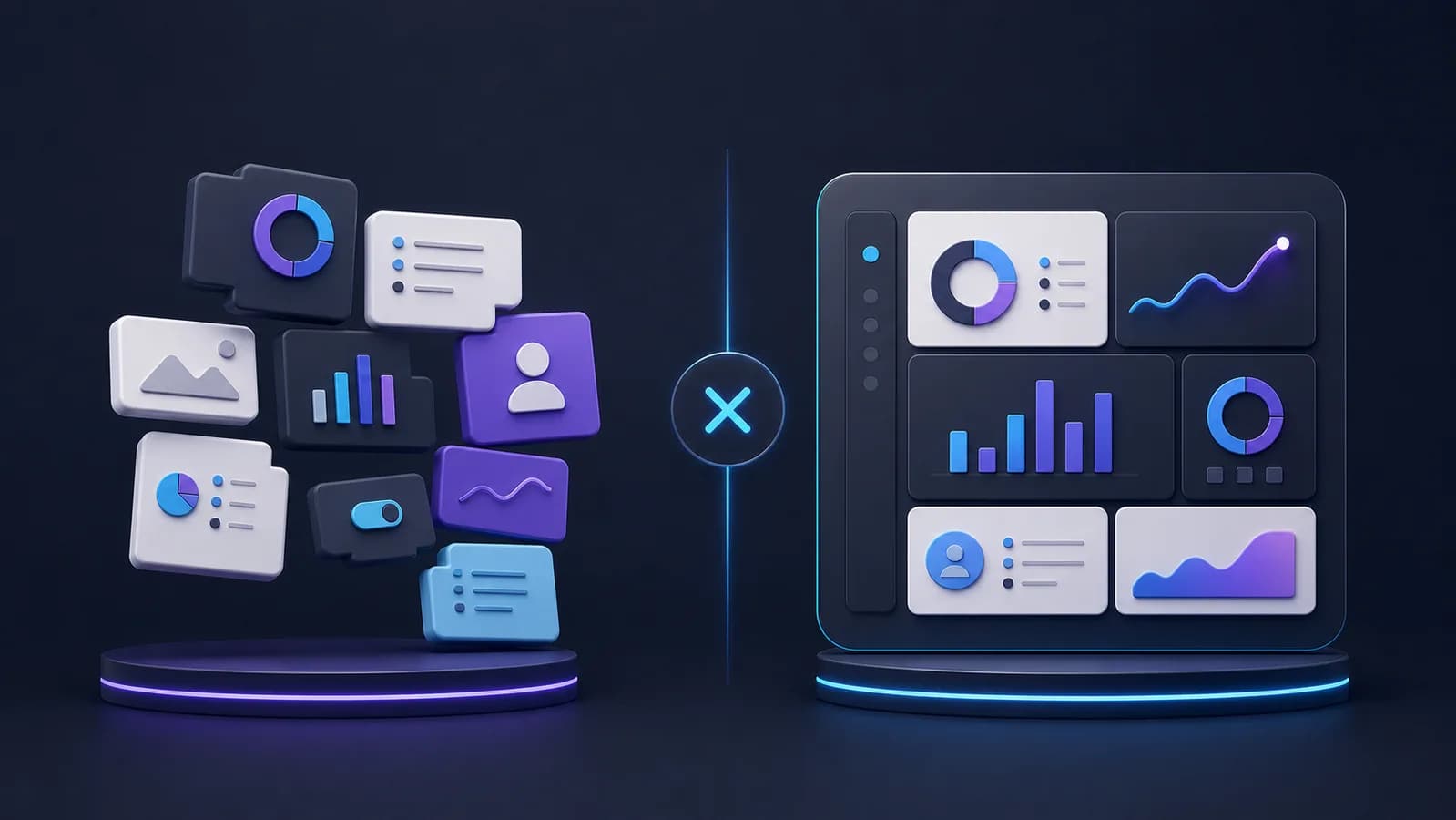
Plenty of people think they need a custom system the moment something gets clunky at work. Usually that is not true. Most of the time, ready-made software is the smartest choice, and the cheapest one over time.
But sometimes it is the other way around. You pay for license after license, people build their own workarounds in Excel, and none of the systems talk to each other. That is when off-the-shelf software starts costing you more than it saves.
The difference between off-the-shelf and bespoke
Off-the-shelf software is software that already exists, and thousands of people use the same product. Think Tripletex or Visma for accounting, Microsoft 365 for email, or a standard CRM for your customers. A custom system is built for your business specifically, and does exactly what you need, your way. It is the difference between a suit off the rack and one tailored to your measurements. Both are good, and for the vast majority of people, most of the time, off-the-shelf fits best.
Why off-the-shelf is often the smartest move
I will say this plainly, even though I build systems for a living: always start with off-the-shelf if you can. It already exists, so you can put it to use today. Thousands of people have found the bugs before you, and someone else looks after security, updates and new legal requirements. An accountant does not need their own accounting system, Tripletex does the job better than anything I could build. Building yourself what others have already solved is almost always a waste. When you buy off-the-shelf, you split the bill with thousands of others. Build it yourself, and you pay the whole thing alone, and that is only worth it if you get something nobody else can give you.
The signs you have outgrown off-the-shelf
It rarely happens overnight. It creeps up on you, month by month, until you spend more time feeding the systems than doing the actual work. If you recognise several of these, it is time to consider a custom system:
- The way you work is unusual, and you constantly have to bend and force the system to make it fit.
- The systems do not talk to each other, so you type the same information into three different programs.
- People build manual workarounds, sticky notes and side lists alongside the system.
- An Excel sheet has become business-critical, and the whole company grinds to a halt if someone deletes a row.
- License costs keep growing without fitting, you pay for modules you barely use.
- Only one person understands how it all hangs together, so things stall the moment she is away.
One sign on its own is not enough. But when several happen at once and steal hours every week, off-the-shelf is costing you more than it saves.
Two stories
The accountant who types the same thing three times
An accountant with five regular clients keeps the books in Tripletex, the hours in a separate program, and the invoices in a third. Every month she moves the same numbers between them by hand. An hour logged here never makes it onto the invoice there, so she undercharges and only spots it two months later. The accounting was not the problem, the problem was that three good systems did not talk to each other. The answer was not to throw out Tripletex, but a small connection that let the programs share the same numbers automatically.
The builder whose Excel sheet became business-critical
A construction contractor with six employees built an Excel sheet for his projects years ago. Today that sheet runs the entire business, with twenty tabs and hidden formulas only he understands. The crew text him numbers, and he types them in at night. One day someone deleted a row, and an entire project vanished. When the whole company stops because one row gets deleted, the spreadsheet has outgrown its own job. Here a custom system was the right answer, because the way they worked was genuinely unusual. The accountant needed a connection. The builder needed a new system. Same chaos, two completely different answers.
You do not have to choose one or the other

It is rarely a choice between off-the-shelf and bespoke. The best option is often both. Keep Tripletex for accounting and Microsoft 365 for email, and build a small custom layer on top that glues it all together and fills the gaps. You do not throw out what works, you tie it together.
This is possible because almost every modern system has an API, a door that lets systems talk to each other safely. The custom layer is the glue: it pulls data from one system, sends it to another, and makes sure everything lines up. Some of the doors I most often connect to:
- Meta (Facebook and Instagram), so leads and messages land straight in your system.
- Industry-specific software in your field, like a medical records system for a clinic or an order system for a wholesaler.
- CRM, so customer info, quotes and follow-up all hang together.
- Payments, so a paid invoice updates the accounts and the project on its own.
- Accounting like Tripletex or Visma, so numbers flow in without double entry.
If the system has a door, I can connect it to the rest. A clinic can keep its medical records system, but get a booking system that ties into the calendar, sends SMS reminders, and updates the accounts when the patient pays. It is about connecting the systems together into one machine that works for them.
How to decide

Go through these in order, and stop as soon as you get a yes:
- Is there already a ready-made program that covers the need well enough? If yes, use it.
- Is it clunky only because you never properly learned the program? Then the answer is training.
- Is the problem that several systems do not talk to each other? Then you need integrations, not to rebuild everything.
- Is the way you work so unusual that no ready-made solution fits? Then bespoke starts to pay off.
- Does the current setup steal hours every week, or cause mistakes that cost you customers? Do the math on that time over a year.
Bespoke comes last, not first, on purpose. Most problems are solved more cheaply with the right off-the-shelf software, a bit of training, or a smart connection. A custom system should solve an expensive problem, not create a new one or pad someone's CV.
When should I choose a custom system over off-the-shelf?
Choose bespoke when no ready-made software fits the way you work, when your systems do not talk to each other, or when people spend hours every week typing things twice and building workarounds. If a standard program covers the need, it is almost always the smartest and cheapest choice over time.
Is off-the-shelf software like Tripletex and Visma good enough for a small business?
Usually, yes. For a perfectly ordinary need, like accounting, email or simple customer follow-up, ready-made software is often better than anything I could build. It is tested, maintained and updated for you. Start there, and only build your own if you genuinely outgrow it.
Do I have to throw out the systems I already use?
No. The best move is often to keep what works and tie it together. Almost every modern system has an API, a door that lets them talk to each other. I can connect accounting, CRM, payments, Meta and industry-specific software into one whole, without you throwing out what you have.
What is the real cost of a custom system?
It is not just building it. A system you own also has to be maintained and updated when the things around it change. That is why bespoke only pays off once it clearly saves you more time and errors than it costs to look after. Do the math on the hours across a full year.
Always start by asking whether off-the-shelf covers the need. If it does, use it with a clear conscience. If it does not, because the systems do not talk to each other or the way you work is too unusual, then it is worth building, often as a blend: keep the ready-made part that works, and build a small layer that glues it together. If you want an honest assessment, take a look at how I work with systems and integrations, or read on about automating work processes, which is often the first step.
Want help with this? See how we work with bespoke systems.
Not sure where your website stands?
Run a free analysis and get an honest picture of speed, structure and things that could be stopping your customers.