What does it cost to build an app in Norway?
You are wondering what an app costs, and you want a number. I get it. But the question is more like "what does a house cost" than you think. A house can be a tiny cabin or a large detached home. An app is exactly the same.
The price does not hang on a magic number, it hangs on what the app is meant to do. The more things it has to handle, the more work sits behind it. An honest price always comes after a good conversation, never before.
Why nobody can give you a price over the phone
Imagine calling a carpenter and asking "what does a house cost?". He cannot answer until he knows how big it should be and what kind of kitchen you dream of. An app is exactly the same. A simple app that shows opening hours and a contact form is quick to build. An app with login, payment and booking is a completely different job. If someone gives you a fixed price without asking anything, they are guessing, or they are cutting quality to hit the number.
Start with the smallest useful version
The smartest thing you can do is start small. In the app world we call it an MVP, the smallest version that is actually useful. Not the bare-bones one, but the smallest one that solves a real problem. Say you run a gym and dream of booking, payment, workout videos, chat and points. That is a lot. But what do members need most from day one? Usually just to book a session on their phone.
So we build that first, and the rest follows once you see what people actually use. You learn more from one real user than from ten meetings around a table. You do not pay for features nobody uses, and you reach the market faster.
What drives the price
A few clear things push the price up or down. Understand them and you can sense for yourself whether an offer is fair.
The features
The biggest driver. Every feature is a little machine that has to be built, tested and looked after:
- Login. Accounts and passwords require security. More work than it sounds.
- Booking. Calendar, available slots, confirmations. Medium weight.
- Notifications. Push messages on the phone. Easy enough to set up, but it has to be done right.
- Payment. Money flowing into the app has to be watertight and follow the rules. Raises the price the most.
- Admin panel. A section where you manage the content yourself. Saves money over time, but costs to build.
- Integrations. The app talks to other systems, like accounting. Depends on how easy the other system is to connect to.
An app with only login and notifications is light. Add payment and integrations and the job grows fast.
Design before code
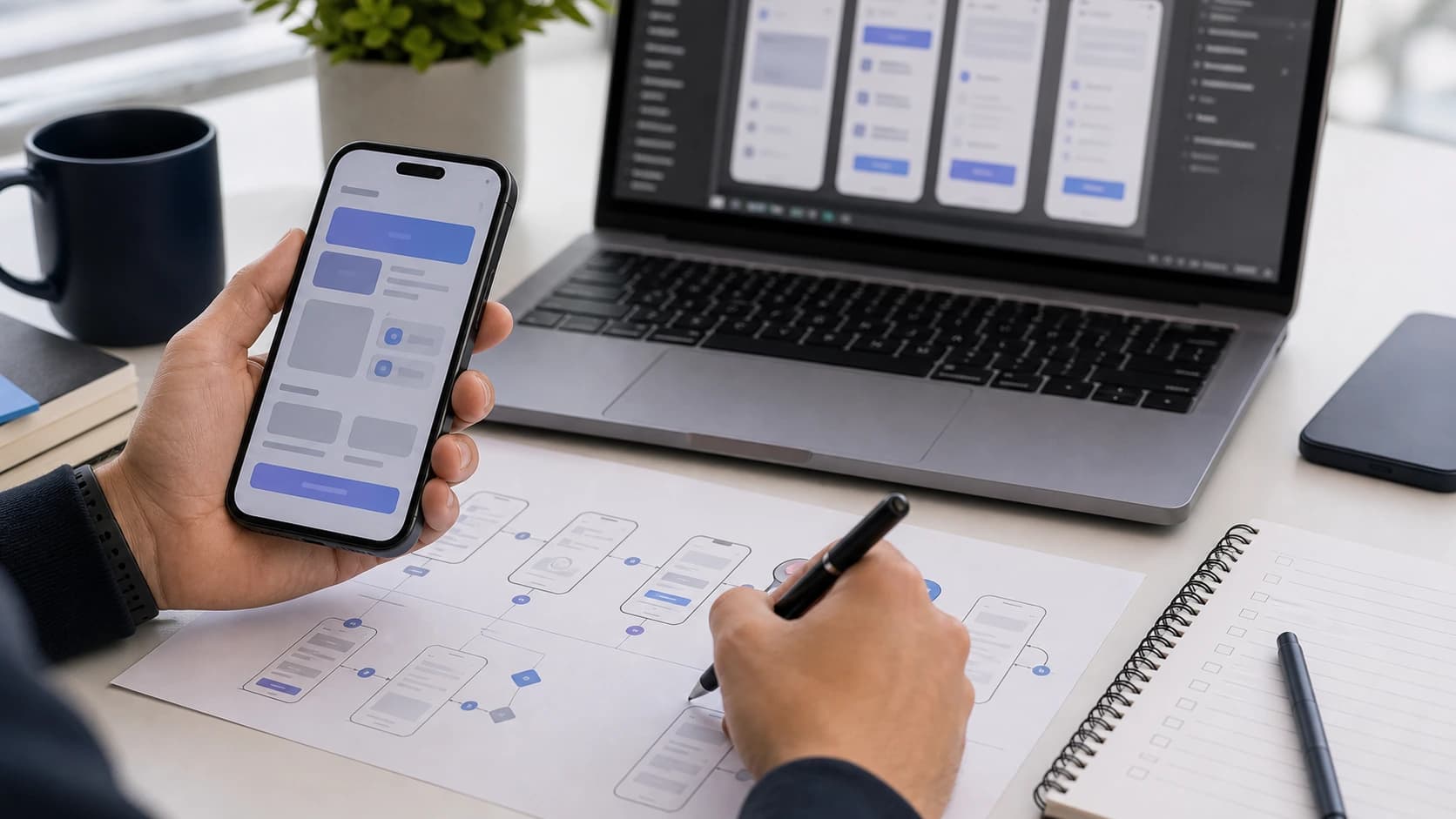
Design means drawing the whole app before we write a single line of code. Where does the user tap, what happens then, how does it all flow? Fixing a mistake in a drawing takes minutes. Fixing it in finished code takes days. Take an accountant who wants an app where clients upload receipts: if it takes five taps to upload one photo, people give up and email instead. Good design catches mistakes like that before we have spent a single krone on coding.
Running it after launch
An app is not finished the day it is ready. I build Android apps, and both Android and Google Play update regularly. Sometimes the app has to be updated just to keep working. Think of maintenance like servicing a car: a little, regularly, so you avoid an expensive blowout later.
How to keep the cost down
- Write down the one problem the app should solve. One sentence. If you cannot, the idea is still too big.
- List every feature you dream of. Empty your head, no filter.
- Split the list into "must have" and "nice to have". Be strict. Most things land in "nice to have".
- Build only the "must haves" first. This is your MVP, out fast and the cheapest way to start.
- Let it loose on real users. See what they love and what they ignore.
- Add features based on real usage, not guesswork. Now you know what is worth the money.
That way you build the app as it proves its own worth. A hairdresser who dreamed of booking, payment, loyalty and a product shop started with just booking and a reminder the day before, because that was what bothered customers most. Once booking took off, we added payment. The shop stayed in the drawer until someone actually asked for it. Every krone went to something customers used.
Do you even need an app?
This is perhaps the most important question, and it saves the most money. An app is right when people will use your service often, ideally from their phone, and when notifications or login add real value. For many businesses a good website is enough, and a lot cheaper. A plumber who just wants to be found and contacted rarely needs an app. A grocery store with loyal weekly customers, on the other hand, can get great value from one. I say this openly, even though I build apps, because building the wrong thing is the most expensive mistake of all. If you are in doubt, read app, website or both?.
Is an app always more expensive than a website?
Usually yes, because an app takes more work and has to be maintained for Android and Google Play over time. But a simple app with few features can cost less than a large, advanced website. It is the scope that decides, not the word "app".
Can I start small and expand later?
Yes, and that is exactly what I recommend. We build the smallest useful version first, release it to real users, and add features based on what people actually use.
Why do I have to pay for maintenance when the app is finished?
Because Android and Google Play update regularly, and the app has to keep up to keep working. Think of it like servicing a car. A little regular maintenance prevents an expensive blowout later.
Do you build apps for both Android and iPhone?
I build Android apps. That means your app reaches everyone with an Android phone, which is the majority in Norway. If you want to know whether Android fits your particular business, have a chat with me.
Want to know what your app will actually cost? Then we start with a conversation about what it should do, not with a random number. See how I work with app development, or ask for a free analysis of your idea.
Want help with this? See how we work with apps for android.
Not sure where your website stands?
Run a free analysis and get an honest picture of speed, structure and things that could be stopping your customers.