AI chatbot for businesses: when is it worth it?
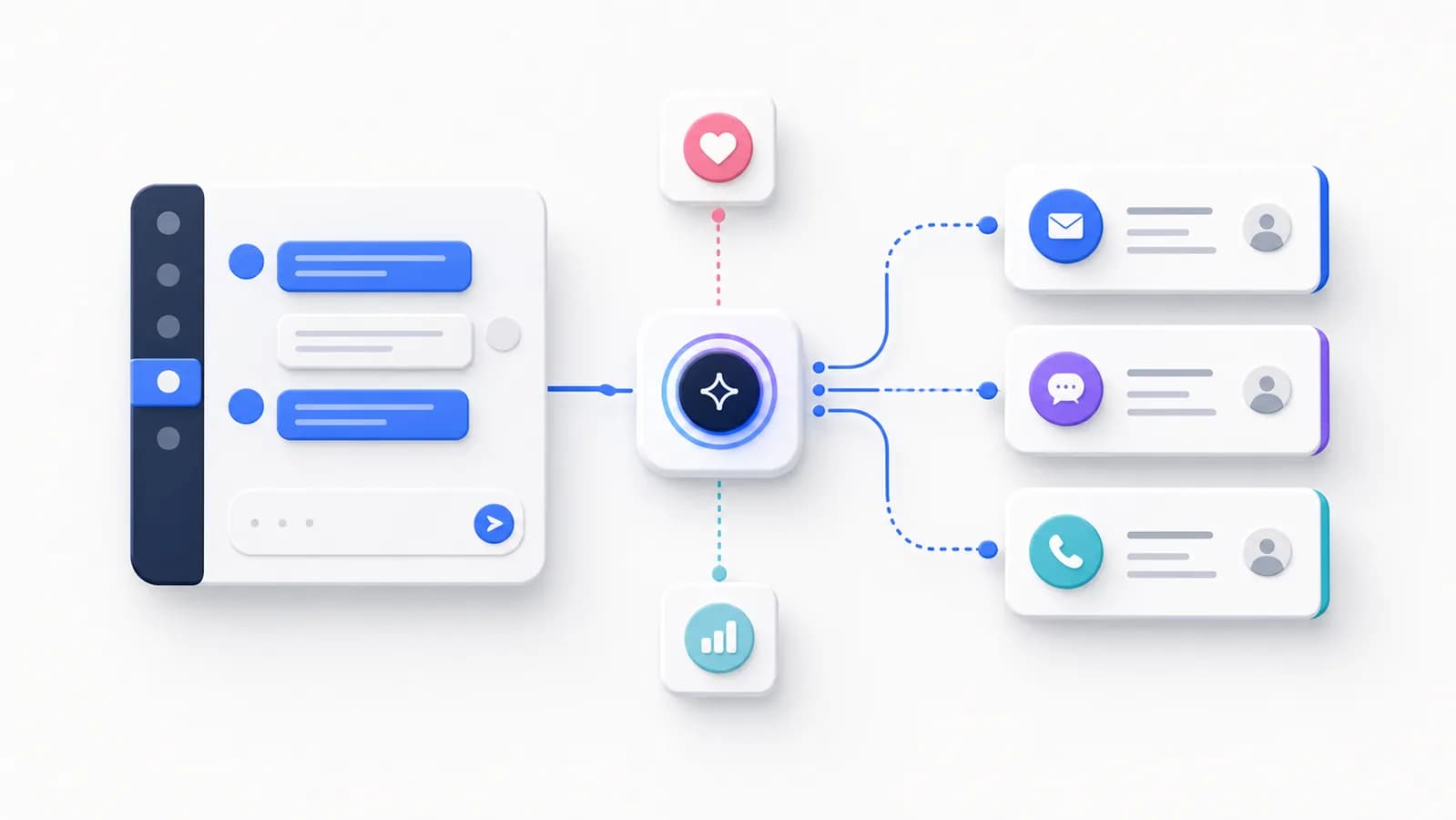
An AI chatbot helps your business only when it answers real questions and saves real time. Not when it is a cute button in the corner that says "Hi, how can I help you?" and then cannot help with anything at all.
I meet a lot of businesses that think they need a chatbot because everyone else has one. So they build something fast, it answers wrong, and customers get annoyed. At that point it is worse than nothing.
What an AI chatbot actually is
A chatbot is a small chat window on your website. The customer types a question, the bot answers with text. An old-fashioned bot followed a fixed script, and the moment you asked something off the plan, it stopped dead. A modern AI chatbot understands plain language. "Do you have a slot free on Thursday?" and "can I book for after the weekend?" mean the same thing to it, even when the words are different.
The most important part: a good AI chatbot can be trained on your own documents. Price lists, terms, common questions, routines. Then it answers based on how your specific business does things. For an accountant, that is the difference between a bot that says "deadlines vary" and one that says "the deadline for your type of company is this date, and these are the documents I need". A bot without your documents guesses. A bot with them knows.
When is a chatbot worth it?
The question is not whether a chatbot is nice technology. It is whether it solves a problem you actually have. I look for four signs:
- Lots of similar questions. "What does it cost?" and "are you open on Saturday?" come up every single day.
- Customers want fast answers. They will not wait until tomorrow, otherwise they move on.
- Your team spends time sorting. Much of the work is just pointing people to the right person or form.
- The information exists, but is hard to find. The answer is on the page, but nobody can be bothered to look.
A dentist gets the same questions all day: do you take emergencies, what does a check-up cost, can I reschedule? A bot trained on the clinic's routines answers in seconds, while staff look after the patients in the chair. An estate agent gets enquiries about viewings late at night, long after closing time. The bot answers the simple things right away and notes down contact details for those who want to speak to a person the next day, so no interested buyer disappears just because it happened to be nine in the evening.
When you should skip it
- You get few enquiries. If you get three questions a week, it is faster to answer them yourself.
- Every case is unique. A lawyer with complex cases cannot let a bot weigh in on legal matters.
- Your information is messy. The bot is never better than what it is trained on. Garbage in, garbage out.
- You only want one because others have one. That is not a reason, it is an expense.
Start narrow, with one area

The most common mistake is wanting the bot to know everything from day one. Then it ends up half-good at all of it. Do the opposite and start with one area where the questions are frequent and similar. For an accountant that might be "deadlines and documents":
- Pick the one area that takes the most time right now.
- Collect the actual questions customers ask, word for word.
- Train the bot on your own documents for that one area.
- Set a clear boundary: outside the area, the bot hands the case to a person.
- Test with real questions, fix what slips through, and only then expand.
A narrow bot that is reliable always beats a broad bot that guesses. And you learn a lot from the first area: which words customers use, and where they get confused. That knowledge makes the next area much easier.
Common chatbot mistakes
- The bot is not allowed to say no. Under pressure to answer everything, it makes things up, and a made-up price is worse than no answer.
- No path to a person. The customer is stuck with a machine that does not understand.
- Out-of-date documents. If you change prices without updating the bot, it lies without knowing it.
- It tries to be funny. A lawyer's client wants precise answers, not jokes. The tone has to fit the business.
- Nobody watches the conversations. Then you never discover what is slipping through.
Notice that none of these are about technology. They are about how the bot is set up and looked after, which is exactly why they are easy to fix.
What it gives back

A good chatbot gives you three things. Time, because every question it handles is one you do not have to answer yourself. Fewer lost customers, because people who do not get an answer move on, and an agent who replies within the minute wins over one who replies the next day. And calmer days, because the interruptions drop off when the simple questions are handled automatically.
It does not ask much of you: good documents to learn from, a clear boundary for what should always go to a person, and a look at the conversations now and then. In return it works around the clock, never gets tired, and answers the hundredth question as calmly as the first.
Is it worth it for you?
Ask yourself three questions: do you get the same enquiries over and over, do customers want answers fast, and do the answers already exist, just hidden a little too well? Think about a normal week, how many times did you answer the same thing, and how many enquiries came outside working hours? If you answer yes to two of three, a chatbot is probably a good investment. You can also take a free AI check for a concrete answer for your specific business.
Can an AI chatbot learn about my specific business?
Yes. A good bot is trained on your own documents, like price lists, terms and common questions. Then it answers based on how your business does things, not generically.
What happens when the bot does not know the answer?
Then it should say so honestly and pass the case on to a person. A bot that pretends to know everything damages trust. One that knows its own limits builds it.
Does a chatbot replace customer service?
No. It takes the simple, repetitive questions, so your people have time for what actually needs a person. It is a helper, not a replacement.
How much do I have to change on my website to get one?
Very little. The chatbot sits as its own window on the page. The most important work is tidying up the documents it will be trained on, not rebuilding the website.
My job is to build a chatbot that actually answers, knows when to stay quiet, and passes people on to you when needed. Not a decorative button. I always start narrow, train it on your own documents, and make sure there is always a path to a person. If you want to know whether it is worth it for your business, take a look at my AI services, or read on about AI for businesses.
Want help with this? See how we work with ai & automation.
Not sure where your website stands?
Run a free analysis and get an honest picture of speed, structure and things that could be stopping your customers.